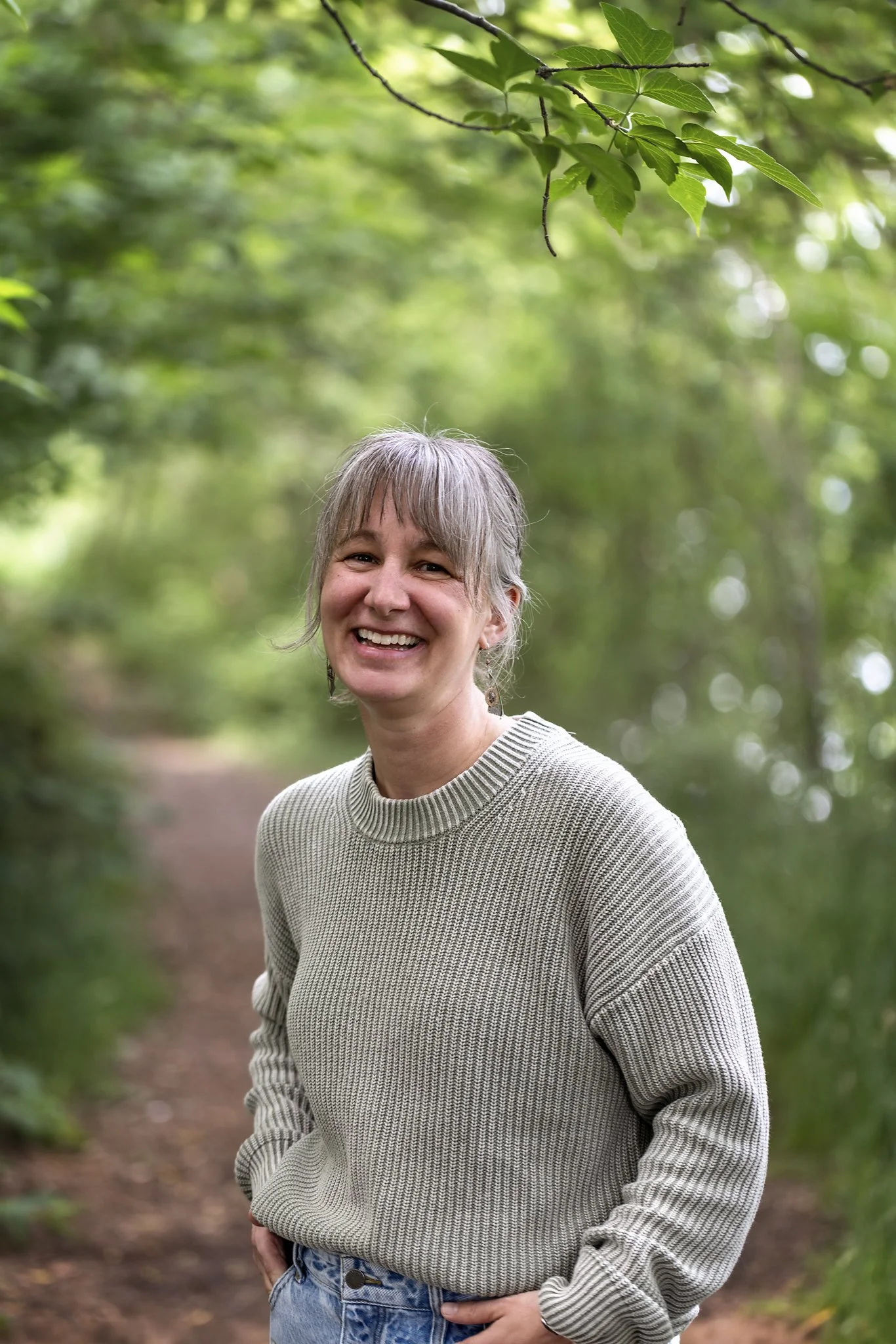
A little about me:
With an ability to be highly attuned, I offer a supportive space for clients to express themselves authentically and to find a way forward. I maintain an unflinching curiosity for life and for people, finding joy and humour in daily existence.
I use a collaborative and holistic approach, combining traditional counselling modalities, which focus more on cognitive processing, with Somatic Experiencing®, which focusses on the body’s innate ability to process symptoms of stress and trauma.
In addition to being a compassionate counsellor, I have a lifetime of diverse experiences. I hold a bachelor’s degree in journalism and have worked in many different sectors, including tourism, farming, communications, wildland firefighting, and crisis support.
Outside of counselling, I love to be with family and friends, to play and sing music, to be near water, and to dance. I am grateful to live and work on the unceded traditional territory of the Secwépemc people.
Preferred modalities and approaches
Somatic Experiencing® - a body-oriented, resiliency-based approach used to help resolve symptoms of trauma and chronic stress by focussing on the body rather than just on cognitive processes, drawing on the body’s innate ability to heal itself. You can find more info here.
Solution-focussed brief therapy - a future-oriented approach that focusses on strengths and solutions, rather than problems, with a belief that change is inevitable through small, incremental steps.
Narrative therapy - a strengths-based, non-pathologizing approach that centres individuals as experts of their own lives, weaving in storying to help people re-author their life stories, widen their perspectives, and uncover beliefs, values, and meaning.
Clinical interests/areas of experience:
* Individual adults *
Anxiety
Depression
Emotional regulation/coping skills
First responders/crisis support workers (more info here)
Grief and loss
Life transitions
Neurodiversity
Parenting/coparenting
Self-esteem
Shame
Stress/burnout
Trauma and PTSD
A little about my space:
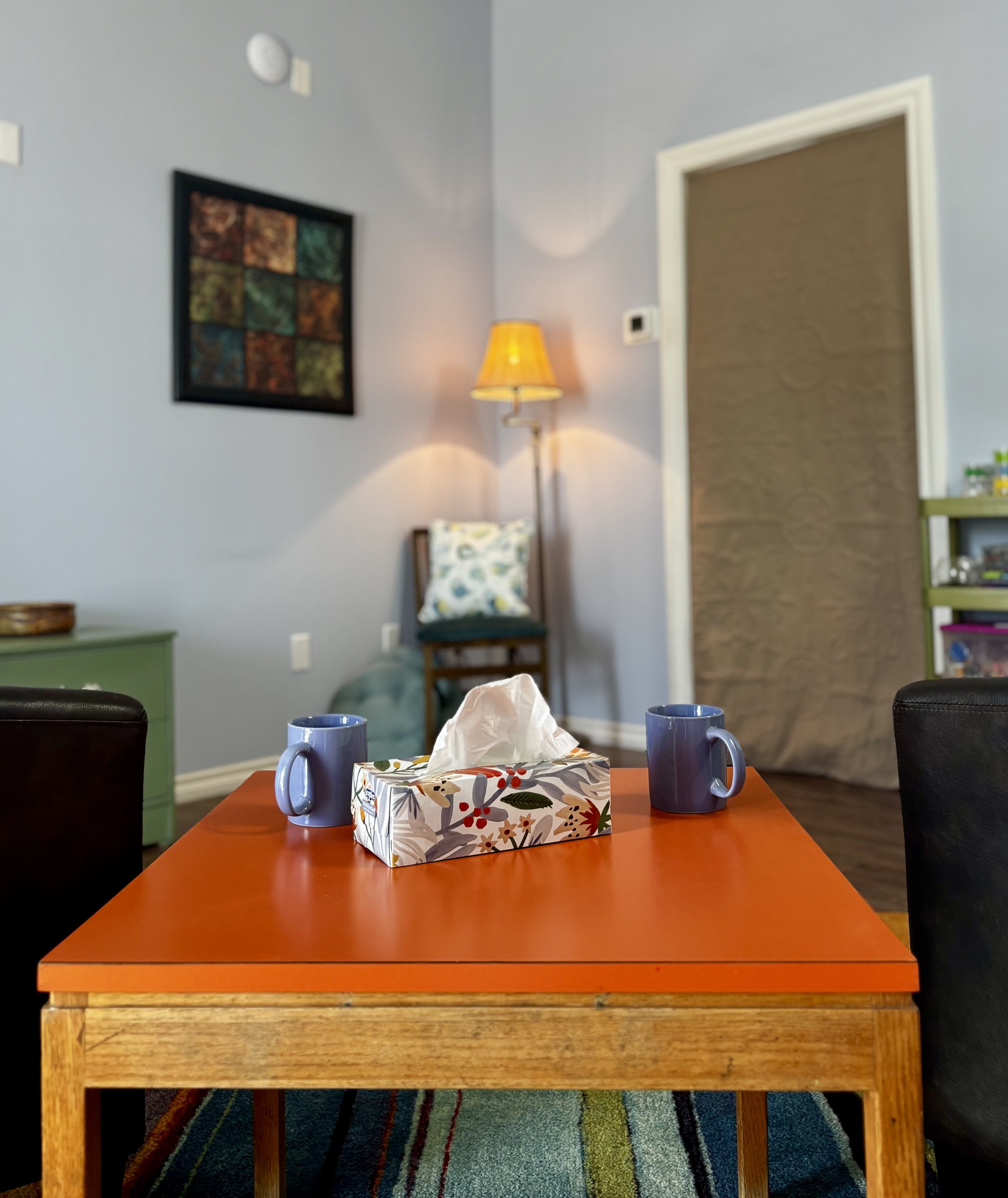
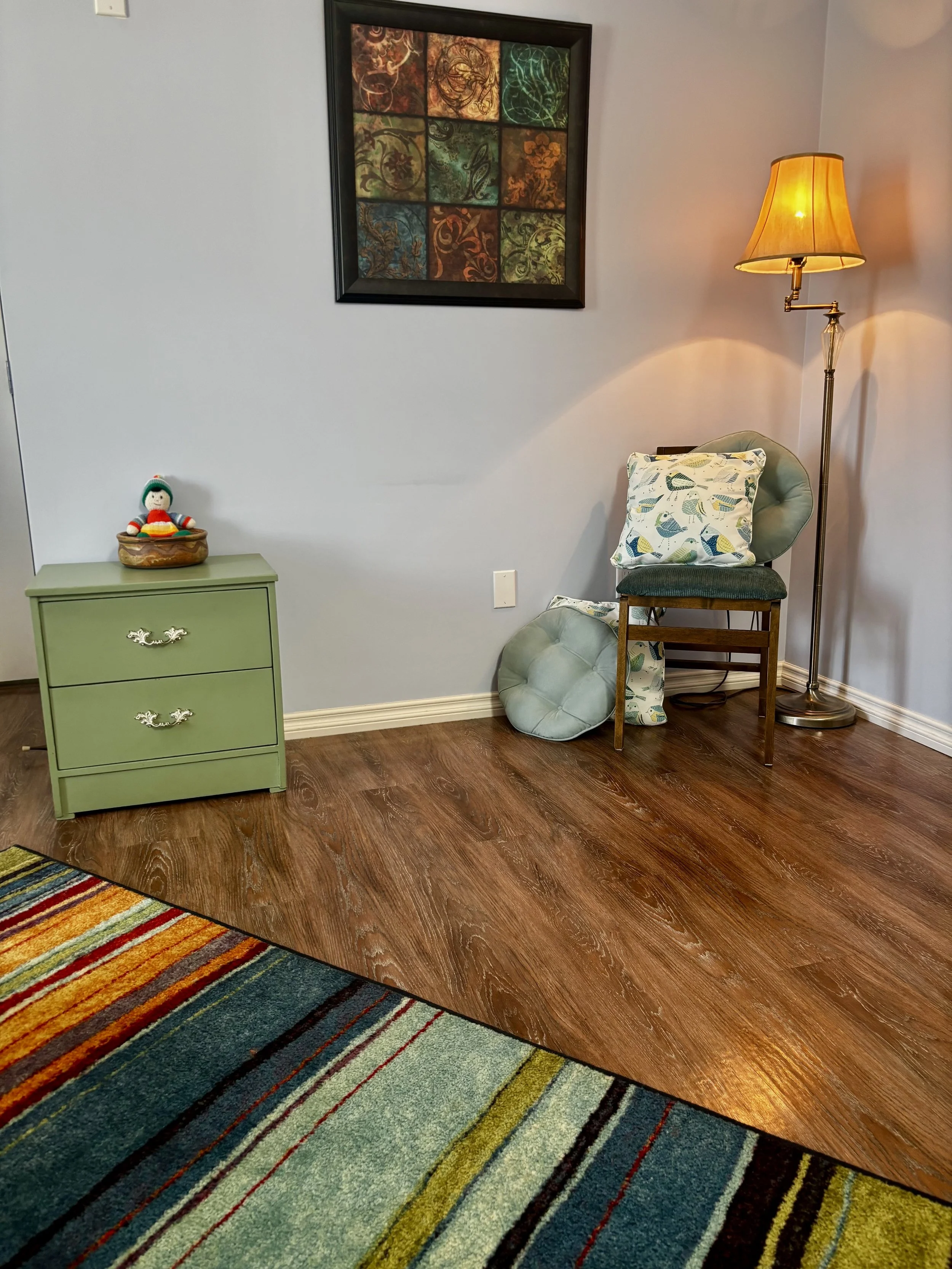
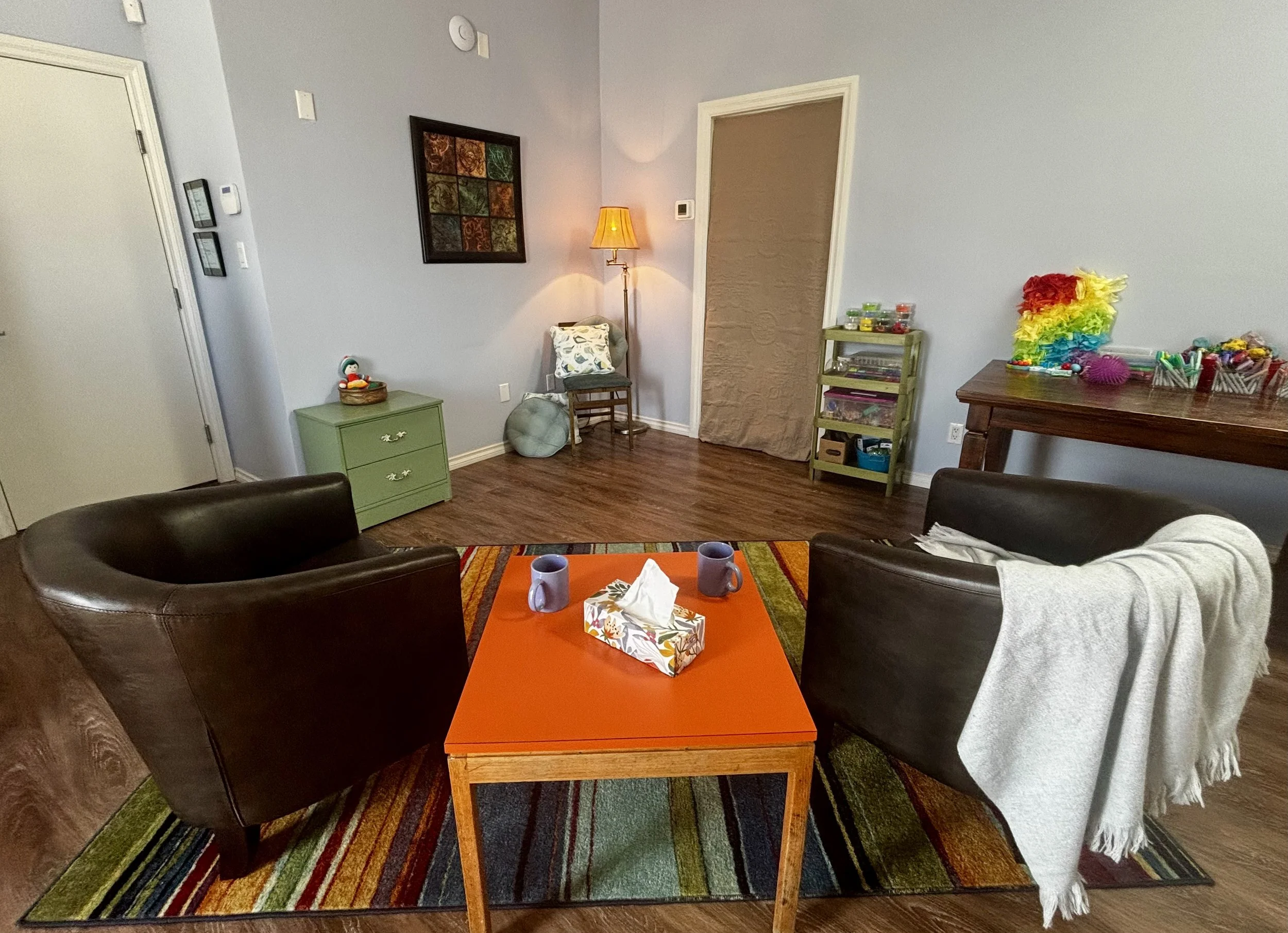
I am privileged to share office space with an expressive arts therapist. The room is spacious, private, and full of natural light. It is texturally layered, providing a visually rich and deeply human atmosphere. Clients say they find it cozy and welcoming.